

In this article
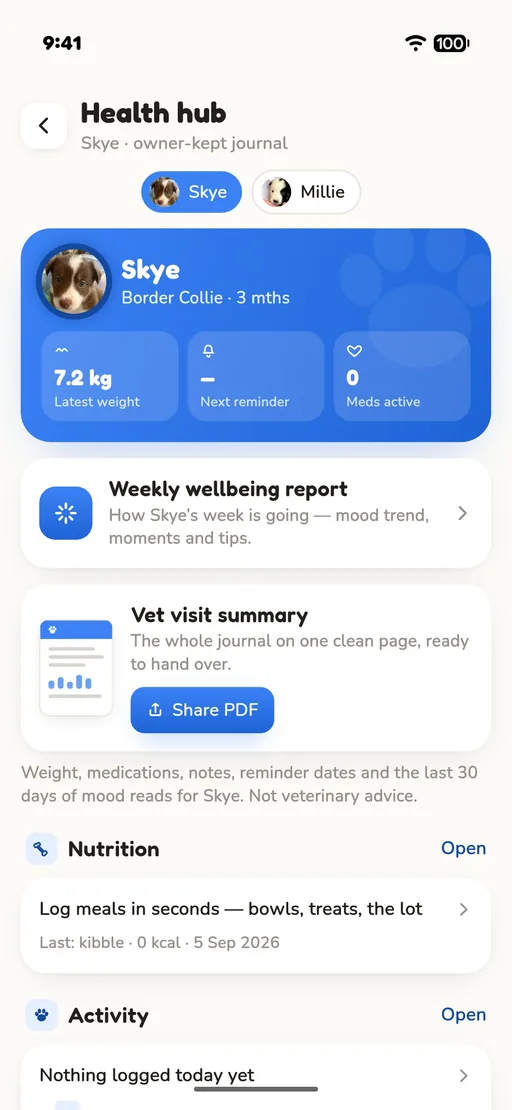
The weekly report combines a score, charts, notable moments, suggestions and logged activity1.
Its usefulness starts before you open it: with the ordinary moments and care records you choose to keep.
The memories walkthrough warns that the written summary may cover an earlier part of the week than the charts. Check the dates and counts before comparing them2. Then use these three habits to make the collection easier to interpret.
First, know what you are opening

Whisperer and above include the weekly report. The plans walkthrough shows where to check account access and distinguishes subscriptions from temporary Tracker Passes3.
Kennel also includes it; Tracker and a Tracker Pass do not1.
The zero-to-one-hundred score uses Thriving, Settled or A little unsettled as its label and takes read confidence into account1.
Treat the number as an introduction to the records, rather than a target to maximise.
Before reading the narrative, choose the dog you intended to review. Think of a real question you would like the week to help you explore. Was there something you wanted to remember, describe to another carer or ask a professional about? Keeping that question beside you makes it easier to notice what the report can and cannot answer.
Habit one: collect ordinary moments across the week
Imagine opening an album made entirely during one lively afternoon. It might capture that afternoon beautifully. It would give you little to work with when you wanted to remember how the rest of the week went.
Aim for moments you would naturally want to understand. You do not need a spectacular event or a different mood every day. If a day passes without a read, leave that gap visible in your own understanding instead of filling it with a confident account of what the dog must have felt.
The report's AI receives saved-read times, mood labels, confidence and captions, rather than the clips or keepsake photos1.
A written account is still being built from selected records.
Personalised insights controls whether reports use the dog's name and personal details in their written insights. The privacy walkthrough puts that switch in Settings, under Data & personalisation4. Choose the setting you want before relying on personalised wording.
Here is a practical distinction to keep in mind: recording a moment and explaining it are two different jobs. You may know that someone knocked at the door. You may be less certain why the dog responded as they did. Keep the first observation, and leave the second as a question when the evidence is incomplete.
Habit two: log the activity that actually happened
The everyday-care guide lets you choose the dog or dogs, the activity, its date, time and duration. Notes can describe what you practised or where you went. Distance and steps are manual details from your own tracker, not measurements made by Dogoos5.
That gives you a useful check before interpreting a quiet activity chart. Did the dog have a quiet day, or did an ordinary session never become an entry? Ask the person who was there rather than using the empty space as an answer.
The comparison requires five days with reads, including two active and two rest days1. It is a display rule, not a reason to alter your dog's routine.
PDSA advises matching exercise to the individual dog's age, health and other needs, changing it gradually and asking your vet if you are unsure6. Follow that care advice rather than exercising for the chart.
The care walkthrough also says that the activity-and-mood view does not prove a walk caused a mood5. If you notice a difference between days, ask what else changed: who was home, where the dog went, what you recorded and what you did not.
For a shared household, agree who will enter an outing before both of you record it. The guide says shared dogs have shared care records and recommends checking existing entries5. A useful account is one you can recognise when you look back together.
Habit three: choose when to make the written summary
The walkthrough explains that a report's written summary may have been prepared earlier in the week while charts include newer reads2.
The product guide says the words are made when you first open that week and kept, while charts update1.
If you want the written review to reflect more of the week, choose a regular time near its end to open it. This is an editorial routine for looking back, rather than a rule about when to check on your dog. You can still make notes or seek help whenever you need to.
If you have already opened it, compare its coverage count with the current total. The memories guide recommends checking those counts and dates2. You do not have to make the older paragraph describe information it did not cover.
A second device can create another local copy, using another report from the weekly budget, although not a daily read1.
Let the present dog outrank the score
Dogs Trust advises considering the whole body and context. If a dog looks worried, stop the interaction and help them gain space7. Getting another read should not take priority over that response.
Take the concern in ordinary words. For example, you might want to explain when a change began and what you actually observed. A warm label does not cancel a concern, and a less settled label does not identify its cause. The dog's current needs are the reason to act.
Check the record before drawing a conclusion
The memories walkthrough lets you revisit saved results through Mood history and select the dog and date range2. Use that route when a sentence raises a question you want to explore.
Questions for a useful review
- Is this the dog and period I intended to open?
- What does the written summary say it covers?
- Which activity entries can I recognise?
- What important moments were never recorded?
- What did I observe directly, and what am I inferring?
- Is there a practical question to ask a carer or vet?
You might discover a gap in the records rather than a new fact about the dog. That is still useful. Decide whether there is something simple you would like to remember next time, such as who took the walk or what was happening around a moment you found difficult to interpret.
Finish with one useful next step
A small weekly routine
- Look backPick one moment you want to remember
- CheckCompare your recollection with the saved entry
- AskWrite down a question the records cannot settle
- ActChoose a care or recording step that fits the actual situation
There is no need to turn the review into an inspection of your performance as an owner. Keep what helps you notice the dog and communicate with the people caring for them. The next useful thing may be an accurate note, a conversation or putting the phone away to spend an ordinary evening together.
Sources and further reading7 sources
The small numbers in the article link to the source behind each fact. Sources open on their own websites.