

In this article
- Start with the four definitions
- Dogs welcome answers another question
- A rating is information with its own source
- Enforcement is active, but it does not certify a listing
- A result becomes a booking only when it is confirmed
- Keep the useful details, and report a problem
- Make the final check about your own visit
Fetch, everything dog near you, uses Listed, Checked, Claimed and Bookable to label places1.
Before relying on a card, ask what you actually need to know. Being able to find a place, establish its dog policy and reserve a visit are different jobs. A short label can help you begin those checks without answering every question about the day ahead.
Start with the four definitions

Dogoos publishes these meanings1:
| Label | Meaning |
|---|---|
| Listed | A Google listing, not yet checked by Dogoos |
| Checked | Dog facts confirmed by a person at Dogoos, with a date |
| Claimed | The business verified its own listing |
| Bookable | Accepts booking through Dogoos, paid directly to the place |
Treat that as information about the listing, rather than a promise about every part of a service. A confirmed dog fact does not answer every possible question about fencing, a busy room, an individual dog's needs or the conditions on a particular visit.
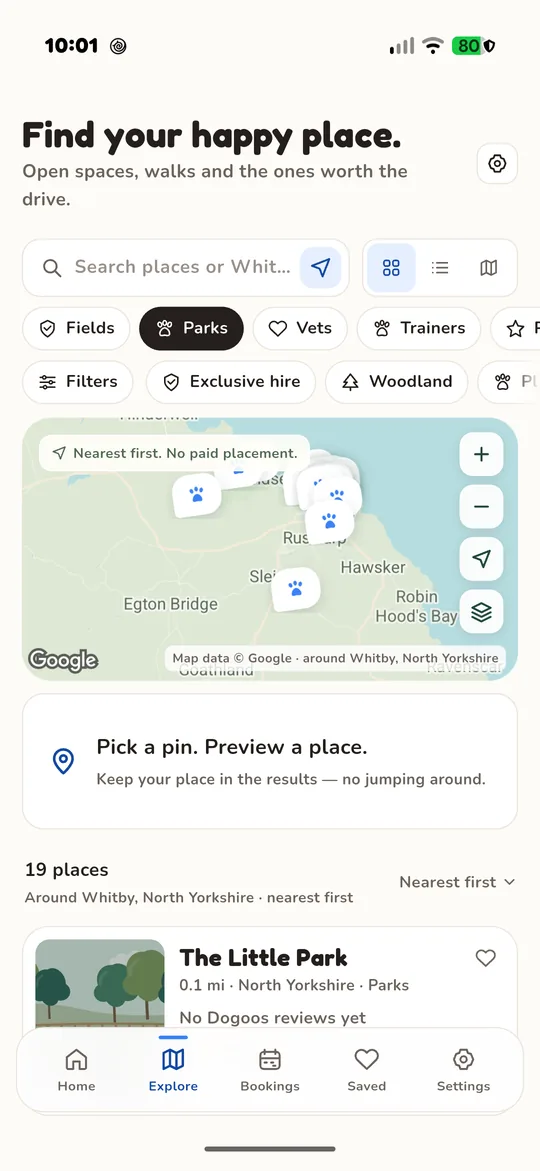
Dogoos says results are ordered nearest first with no paid placement. Google supplies information such as addresses, opening hours, photographs and ratings for Listed places, with the source identified1.
Distance may help you make a shortlist, but you still choose what suits the outing. The closest result could be useful to phone, a convenient fallback or somewhere you decide to leave for another day. A position in a nearby list is not a personal recommendation about your dog.
Dogs welcome answers another question
The days-out guide says Dogs welcome reflects Google's record that a place accepts dogs. Its filter keeps results with that record; other results need checking directly2. That label is different from the four listing labels.
The same guide recommends checking the attraction's own policy. Dogs may be allowed in grounds but not indoors, and lead rules can apply in particular areas or seasons2. Ask about the part of the visit you intend to use.
Imagine choosing an outing that includes a garden and a café. Permission to walk through the garden would not by itself tell you where the dog can be during lunch. Ask the venue to explain the actual arrangement before building the rest of the day around it.
Be specific when you call. Say how many dogs will be with you and which service or area you want to use. If a particular detail matters, such as where you can wait, ask that question plainly rather than hoping it is included in the phrase dog-friendly.
Keep an important answer in your own notes: who you spoke to, when you asked, what they confirmed and which visit you discussed. That gives you something concrete to check if another household member finishes the booking or takes the dog.
A rating is information with its own source
The Competition and Markets Authority's guidance treats star ratings, overall scores, review counts and rankings as review information, alongside individual reviews. It identifies fake reviews, concealed incentivised reviews and misleading aggregated information as problems publishers must address3.
Concealed incentives are the relevant distinction. The guidance discusses reviews that hide a reward or benefit, rather than saying that every disclosed incentive makes an opinion unlawful. It requires publishers to take reasonable and proportionate steps to prevent and remove banned content3.
For your own decision, look for the detail that speaks to the visit you are planning. A general enthusiastic comment may tell you less about your practical question than a clear statement about the service used. Keep an opinion about a past visit separate from confirmation of the present dog policy.
You can appreciate a useful review without asking it to do the work of a booking confirmation, access instruction or professional qualification. The more specific your question is, the easier it is to identify which source can actually answer it.
Enforcement is active, but it does not certify a listing
In its April review of enforcement, the CMA said it had written to fifty-four review publishers and that ninety per cent then acted to improve their policies. It also reported opening investigations into five companies over potentially misleading reviews4.
The October update said those five reviews investigations were continuing. It called for effective systems and prompt action against misleading content5. An investigation concerns possible breaches; it is not, by itself, a finding that a business broke the law.
Those reports explain why review handling matters. They do not establish that any particular dog-place review is genuine or false. Likewise, a policy improvement is not evidence that every published opinion has been independently verified. Keep using the source, details and direct questions together.
A result becomes a booking only when it is confirmed
The Fetch walkthrough says to review the seller, total price, rules and cancellation policy before agreeing. An estimate, temporary hold or payment request alone does not mean the visit is booked6.
Dogoos's main directory page describes paying Bookable places directly by bank, with no Dogoos fee1.
Read the actual seller's conditions alongside the price. Do not infer a refund outcome from the fact that a button was available.
It may help to check the practical details before you reach checkout: which dog or dogs are included, which service you selected and whether the date and time are the ones you meant. A familiar place name is not enough if the visit itself has been entered differently.
Keep the useful details, and report a problem
You can search by town or postcode without device location access, and save a shortlist. The walkthrough recommends checking details such as fencing, access and dog rules directly before relying on them6.
If something looks wrong, it explains how to report a listing problem through the directory settings or contact the team. Include the place name, the problem and any relevant status or message, leaving payment credentials out6.
Give a description that someone can investigate. There is a difference between a changed opening time, a confusing dog-policy statement and a service that did not suit your expectations. Say what happened and which information you were using, rather than asking the label to stand in for the account.
Make the final check about your own visit
Before setting off or confirming
- Which organisation supplied the information I am using?
- What does this label actually establish?
- Have I checked the exact dog policy for the areas I want to use?
- Do I understand the seller's rules and total price?
- If I need a reservation, is the saved booking confirmed?
- Which detail should I ask the place directly?
From result to a useful plan
- FindMake a shortlist near the place you want to visit
- ReadSeparate the listing label, dog policy and reviews
- AskResolve the detail that matters for your outing
- ConfirmCheck the actual visit status before relying on a reservation
The labels make the first look clearer. The rest of the decision comes from matching the information to your dog and your plan, then asking a straightforward question when something remains uncertain.
Sources and further reading6 sources
The small numbers in the article link to the source behind each fact. Sources open on their own websites.