

In this article
The rescue paperwork says collie cross. Someone at the park sees a terrier. You can be curious about both suggestions without treating either as a family tree.
Dogoos offers a photograph-based breed estimate1. Here is how to use it, what research on visual identification found and when a different question needs different evidence.
Know what goes into the check
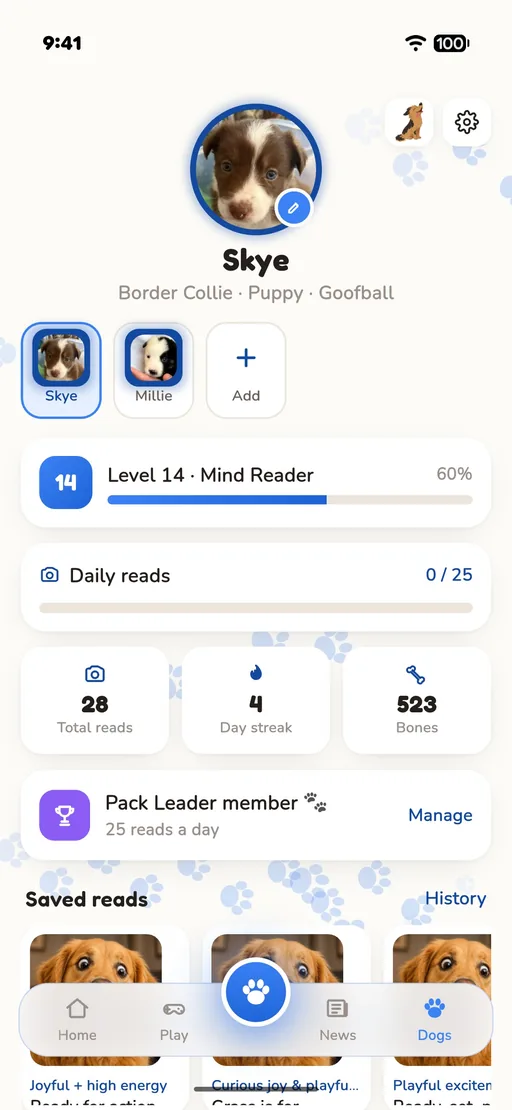
The check first uses your dog's Clear face photo, then tries other profile images in order. It sends one image without their name, age, entered breed or previous result1.
Scores express confidence, not measured ancestry fractions, and need not total one hundred. You decide whether to change the profile1.
Imagine looking through your photos before running a check. One may preserve a wonderful muddy adventure while another gives you a clearer view of the dog. Decide whether you want to keep a memory, show the animal clearly or answer a question about a particular moment. Those are different purposes for a photograph.
Check the pool before using another image
Tracker or above, including an active Tracker Pass, is required. The lifetime pool allows three checks per dog and account totals of six, fifteen or thirty for Tracker, Whisperer or Pack Leader respectively. Poor-photo results still use a check1.
The plans walkthrough distinguishes temporary Pass access from a subscription and says account allowances remain personal in a household2. Sharing the dog does not mean someone else's plan becomes yours.
Before running a check
- Which dog's profile am I looking at?
- Which image will represent that dog?
- What question am I hoping to answer?
- What would I do differently after seeing the result?
- Have I checked the access and remaining allowance shown to me?
If the aim is curiosity, leave room for an answer that remains broad. Repeating a question with another photo does not turn the exercise into genetic testing. The useful decision comes before you spend another check: will another view answer something the first could not?
What shelter staff could identify by sight
An American study genetically tested 919 dogs at two shelters. Its visual-identification comparison concerned 384 dogs at one shelter. Staff matched at least one breed in the test's ancestry result for 67.7%; they matched both primary and secondary breeds for 10.4%3.
Those percentages answer different questions. Recognising one component is not the same task as naming the combination. They are not accuracy figures for Dogoos, UK rescue staff or every mixed-breed dog3.
The study used a commercial genetic panel available at the time. Its Methods say ancestry below about one-eighth was not reported, while Discussion notes the reference database could change what remained unidentified. Two limited-admission US shelters also cannot represent every shelter population3.
That makes a sensible starting point for interpreting an old label on paperwork. It may describe what the dog resembled to the person completing the form. A later estimate can be interesting without requiring you to decide that somebody must have been careless or dishonest.
Ask which kind of DNA question you mean
UC Davis veterinary guidance explains that ancestry tests compare DNA with company-specific reference databases. It distinguishes that purpose from testing known genetic variants related to health and recommends veterinary interpretation before medical decisions4.
The Royal Kennel Club describes a DNA profile as a genetic identity that can be used in parentage analysis. Its health-testing resources list particular tests and relevant breeds5. The phrase DNA test therefore covers more than a single kind of answer.
An American Kennel Club explanation by a veterinary specialist also distinguishes heritage estimates from official pedigree status. It explains that registry status depends on documented ancestry; a genetic similarity result is not itself a pedigree certificate6. That registry explanation concerns the AKC, rather than a universal registration rule.
Before paying for a service, write down the question in ordinary words. A report can contain many impressive-looking details while still not answering the one you had. Ask the provider what it tests and what it does not, and keep any existing records beside the result.
Consumer DNA tests also need interpretation
A small comparison sent samples from twelve registered purebred dogs to six consumer-testing companies. Some submissions used another dog's photograph. Five tests included the registered breed in every returned result; one service's results suggested photo influence, although formal clade comparisons were not significant7.
This small purebred sample does not establish performance for every breed mixture or today's market. The study was not designed to measure ancestry-percentage accuracy, and some submissions returned no result7. Its findings are a reason to scrutinise the method rather than rank products from a headline.
Ask how a provider describes its reference population and uncertainties, and whether the report concerns ancestry, a particular health variant or parentage. A high number on any report is most useful when you understand what that number measures and the question it was designed to address.
Ancestry is not an individual behaviour forecast
Another study surveyed owners of 18,385 dogs and analysed genetic data for 2,155. In an owner-survey comparison involving 78 breeds, breed explained about nine per cent of variation on average across the behaviour measures analysed8.
The researchers found wide variation within breeds and some inherited behavioural propensities. The findings do not mean that genetics contributes only nine per cent to a dog's behaviour. Owner reports, including possible breed stereotypes, and the selected cohort also limit interpretation8.
Most participants were in the United States. The genetic dataset combined low-coverage whole-genome sequencing with array genotyping; it was not whole-genome sequencing of every surveyed dog8. Reading the study as a single score for how much any individual is shaped by ancestry would lose those distinctions.
For your dog, keep noticing what they enjoy, avoid, learn and find difficult. A breed suggestion can prompt a question about an activity; it cannot supply the answer about whether that individual wants to participate. Use the animal's response to guide what you try next.
Try writing two short descriptions: the label you have been offered, and the dog you actually live with. The second might mention favourite games, comfortable walking routes or a preferred resting spot. That description remains useful even if a later estimate changes the first.
Keep the result in its proper place
The photo check cannot establish inherited conditions, predict adult size or prove pedigree1. Keep these limits beside any plausible result.
UC Davis stresses that genetic results also need knowledgeable interpretation for health decisions4. If the concern is your dog's health, take that question to your vet rather than treating a breed guess as reassurance or a diagnosis.
Decide what the result is for
- CuriosityKeep a suggested label as a starting point for questions
- RecordsPreserve what you know about the dog's history
- CareDescribe the individual behaviour you actually observe
- HealthBring the health question to your vet4
You can enjoy discovering a possible part of the mix and still keep your original description. The dog at the other end of the lead gives you information every day, including plenty that a photograph cannot contain.
Sources and further reading8 sources
The small numbers in the article link to the source behind each fact. Sources open on their own websites.
- AI breed check: what is in your dog’s mix, from one photo
- Plans and billing
- A canine identity crisis: Genetic breed heritage testing of shelter dogs
- What Genetic Testing Can and Can't Tell You About Your Pet
- DNA testing
- Why Breed Heritage Tests Are Not “Purity” Tests
- Many direct-to-consumer canine genetic tests can identify the breed of purebred dogs
- Ancestry-inclusive dog genomics challenges popular breed stereotypes