

In this article
You lean over to move your dog off the sofa, or reach for the chew they are working on, and out comes a low rumble. It is unnerving, and plenty of us grew up believing that a growl is cheek, to be nipped in the bud with a firm "No!" Britain's animal welfare charities point the other way, and so does the research.
A growl is one of the clearest messages a dog can send you, and it usually means "I'm not comfortable, please stop"1. Here is what a growl carries, why telling a dog off for it can silence the warning without easing the worry, and what to do the next time you hear one.
What a growl tells another dog
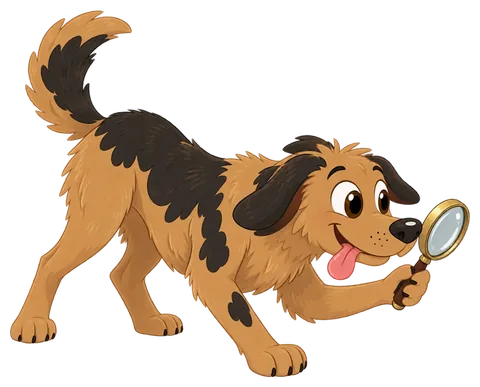
Dogs mostly growl as a threat in a dispute, such as over territory or food, according to the team behind a 2010 study4. Their experiment found that a growl also says something about the dog making it.
Family dogs at the Clever Dog Lab in Vienna heard a recording of a dog growling over food while two copies of one dog photo were projected in front of them. One copy matched the size of the growling dog and the other was 30% bigger or smaller4. Of the 24 dogs given this test, 20 looked first at the picture that matched the growler, and as a group the dogs looked at it for longer4.
Dogs shown the same pictures with plain noise, or cats or triangles with the growl, had no preference4. The researchers concluded that dogs can judge a growling dog's size from the sound alone4. To another dog, a growl is information worth having.
Not every growl is a warning
Some growls are part of the fun: dogs growl in play as well as in conflict5. In a 2017 study in Budapest, 40 adults listened to growls recorded from dogs guarding food from another dog, dogs facing a threatening stranger and dogs playing tug-of-war with their owner5.
Overall, the listeners matched 63% of the growls to the right situation, against 33% by chance5. They recognised 81% of the play growls but only 60% of the food-guarding growls and 50% of the threatening ones, often mixing those two up5. Play growls were shorter, with shorter gaps between them5.
So the situation is your best guide. The play growls in that study came from dogs playing tug-of-war with their owner5. A growl when you lean over your dog's bed, reach towards their bowl or go near a toy they like to keep is another matter: the RSPCA lists all three among the preferences a dog may be prepared to defend1.
The RSPCA says a dog uses aggression almost always because it feels under some form of threat: to its safety, to something it values, or from being stopped doing something it really wants to do1. If you are not sure which kind of growl you are hearing, pause.
Where a growl sits among a dog's warnings

The RSPCA describes how a dog's warnings build. First come quiet signals that show the dog is uncomfortable, such as yawning, lip-licking, turning the head away, dropping the ears, crouching or tucking the tail1. If those do not work, the signals get louder, and they can end in a bite1.
How a dog's warnings build
The PDSA puts it plainly: dogs rarely bite without warning, but some of the warning signs are very subtle and easily missed3. A slight stiffening of the body may be the first or only clue1. A growl, by comparison, is hard to miss, which is what makes it so useful.
Why telling a dog off for growling backfires
So should you tell your dog off for growling at you? The RSPCA's answer is no. A telling-off counts as punishment to a dog, as do smacking, scruffing and pinning down, and all of them feel very threatening1. A dog who growls already feels under threat, so punishment makes them feel more threatened, and they may go from growling to biting because they can see no other way out1.
The longer-term risk is quieter. Punishing a growl may well stop it, the RSPCA warns, but it does not stop the dog feeling threatened. With no way to say so, they hide it until they cannot contain it any longer, and the result looks like an unpredictable bite with no warning at all1.
The PDSA's vets agree. Growling is on their list of signs of aggression, and their advice is never to punish a dog for showing these signs, because telling a dog off may make them act more aggressively3. Some dogs, they add, learn to stop showing warning signs if nobody listens, and move straight to more threatening behaviour3.
Changing an aggressive response is all about understanding why the dog feels that way and then changing that feeling, not about telling them off for the way they feel.1
Surveys point the same way, with the usual cautions. In a US study published in 2009, 140 owners booked in at a university veterinary behaviour service said how their dogs had reacted to methods they had tried6. Only 22 owners had tried growling at their dog, and 41% of those dogs responded aggressively, with anything from a growl to a bite6. Among dogs brought in for aggression towards familiar people, 30% reacted aggressively when an owner yelled "no", against 2% of dogs brought in for other problems6.
The authors could not tell whether the methods led to the aggression or the other way round6. Citing a veterinary handbook, they suggest punishment may increase fear in a dog that is already defensive, and perhaps teach it to bite without warning6. A 2014 survey of UK dog owners found a similar link: training with punishment, or with pressure that stops only when the dog complies, went with a greater chance of aggression towards family members7. A survey like this can show a link but cannot prove cause7.
What to do when your dog growls

When a growl comes, the RSPCA's advice is to stop whatever you are doing, because the growl is your dog's way of warning you to stop1. Then stand still and take stock: moving towards a growling dog can look like a threat, and moving away may make some dogs bold enough to bite1. Once the moment has passed, give them space from whatever upset them, keep your movements slow and steady, and let them calm down somewhere quiet2.
When your dog growls
Do
Afterwards, work out what led to the growl so you can avoid it for now1. Look for patterns: the room it happened in, whether food or toys were involved, whether you were brushing them or trimming their nails, and who it was aimed at3.
A new growl? Start with the vet

If your dog has started growling out of the blue, see your vet. The PDSA advises getting in touch as soon as possible about any change in behaviour, especially aggression that starts suddenly, and says some dogs become aggressive when in pain, from sore joints or a sore back, for example3. Dogs Trust gives the example of a dog who starts showing aggression when the harness goes on, because it hurts2.
Pain is not a rare explanation. When the authors of a 2020 paper looked back over recent cases from six of their referral behaviour caseloads, in the UK, the US and Spain, a painful condition was suspected in between 23% and 82% of the dogs seen for behaviour problems, depending on the caseload, including 68% at Bristol and 82% at Lincoln8. The authors' own conservative estimate is around a third of referred cases8. A review of cases they cite describes aggression linked to joint or muscle pain as typically happening when the dog is approached, often while lying down8.
The authors suspect that in some of these dogs, quieter warnings such as head turns and hard stares were ignored or missed and may no longer be shown, which can make a bite seem to come without warning8. Take any notes or short videos to the appointment: Dogs Trust says they help your vet assess your dog's behaviour2.
Finding the right help
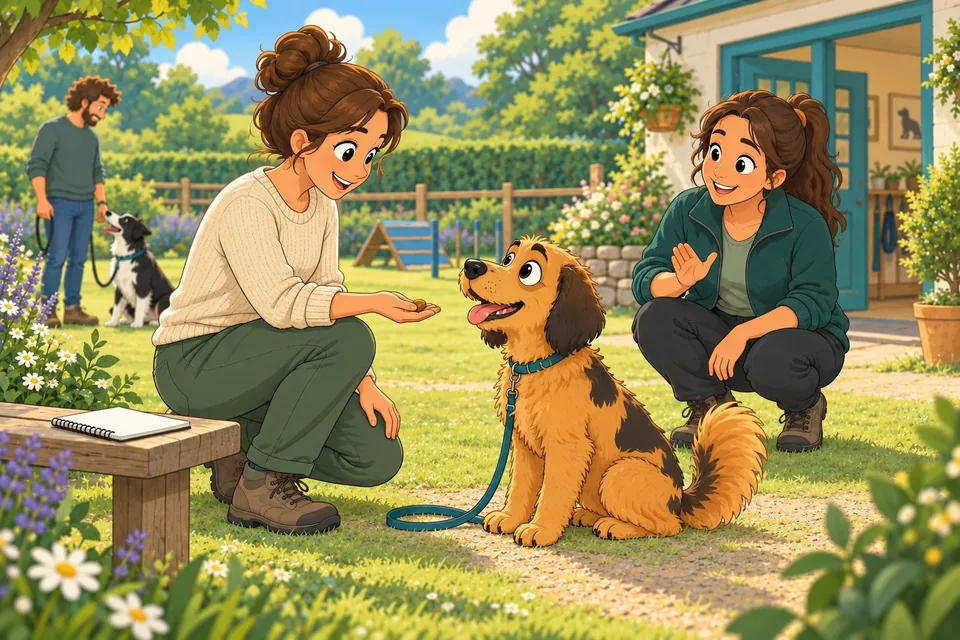
If your dog gets a clean bill of health, the RSPCA says, your vet can refer you to a qualified, experienced dog behaviourist1. It warns that anyone can call themselves a behaviour expert and that outdated methods can make a problem worse, so check qualifications1.
Choose someone who works with rewards. Dogs Trust says methods based on fear, pain or intimidation are strongly associated with more fear, anxiety and aggressive behaviour, while owners who train with rewards report fewer behaviour problems2. The PDSA recommends rewarding a dog for staying calm, so they learn it is a good way to react3.
The low rumble from the sofa is not your dog getting above themselves. It is them asking, as clearly as they can, for a little room. Give it, find out why they needed it, and you give them far less reason to ask any louder.
Sources and further reading8 sources
The small numbers in the article link to the source behind each fact. Sources open on their own websites.
- Aggression in dogs
- Why dogs get scared or frustrated and how to help them
- What should I do if my dog is aggressive?
- Dogs' Expectation about Signalers' Body Size by Virtue of Their Growls
- Dog growls express various contextual and affective content for human listeners
- Survey of the use and outcome of confrontational and non-confrontational training methods in client-owned dogs showing undesired behaviors
- Human directed aggression in domestic dogs (Canis familiaris): occurrence in different contexts and risk factors
- Pain and Problem Behavior in Cats and Dogs