

In this article
The walk was going beautifully. Your dog stopped to investigate a patch of grass, lowered one shoulder and suddenly became extremely committed to the ground. You are now calculating whether the car blanket is washable.
Fox poo invites a wonderfully confident explanation: your dog is disguising their smell to hunt. PDSA offers that ancestral explanation as a probability, alongside advice to use a sensitive, dog-friendly shampoo afterwards1. The practical advice is easier to act on than the evolutionary story is to prove.
A good story still needs the right test
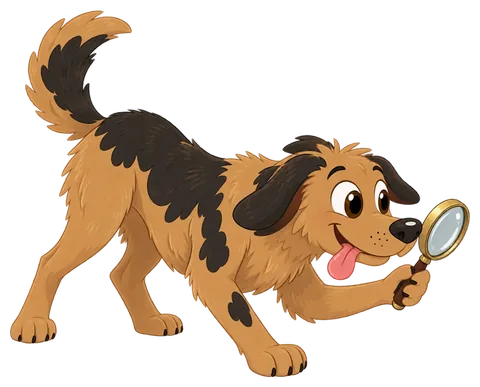
There are different questions hidden inside “why?”. One asks what triggers today's roll. Another asks what advantage a similar behaviour might once have provided. Even a convincing answer to one would not automatically settle the other.
Imagine a study showing that a dog leaves a patch smelling different. That would demonstrate an effect of rolling. To establish camouflage as its function, you would need evidence that the altered scent changes detection by another animal and provides a relevant advantage.
Likewise, your dog returning to the same verge tomorrow would be an observation to record, without proving they are rehearsing a hunt. Keeping the observation and the explanation separate makes room for several possibilities without pretending they are equally established.
Wolves did not simply choose food smells
An older experiment tested 15 wolves in two groups with eight unfamiliar odours. The researchers compared herbivore, carnivore, food and manufactured smells. The strongest rubbing responses were to perfume and motor oil, followed by carnivore faeces. The two herbivore faeces tested did not elicit rubbing2.
Those results complicate a simple claim that wolves roll only in prey smells. Responses differed between odours, and rubbing generally declined somewhat with repeated presentation. The authors proposed several possible triggers, including unusual smells, changed familiar smells and strong attraction or aversion2.
This was a wolf experiment, not a test of British pet dogs and fox poo. Its original abstract supplies those findings; it does not establish a universal motive or make industrial substances suitable enrichment for your dog2.
The useful lesson is about the question being asked. Choosing among smells tells us something different from demonstrating why wearing one would be beneficial. “Interesting to investigate” and “useful camouflage” are separate propositions.
Foxes and hyenas offer different clues
Researchers filmed wild grey foxes at puma scent-marking sites in California over four years. They recorded cheek rubbing during 92 of 903 fox visits, with most rubbing directed at puma scrapes. Rubbing was associated with more recent puma visits, consistent with collecting the larger animal's scent3.
They proposed that smelling of puma might discourage intermediate predators such as coyotes. Crucially, they did not directly test whether it prevented attacks. Their cameras also concentrated on puma marking sites, so the study could not describe all grey-fox rubbing elsewhere3.
This is a different fox species, a different setting and a different scent from a family dog encountering red-fox droppings. It supports an interesting possibility without establishing your dog's purpose3.
A separate experiment with captive spotted hyenas investigated social responses. Researchers applied odours to the animals' coats. Hyenas carrying carrion odour received more investigation and grooming from companions; camphor odour disrupted the usual greeting pattern4.
That is evidence that an acquired smell can change social attention in those hyenas. It does not show that a dog deliberately rolls to bring information home, or that another dog can use the smell to locate its source4.
A helpful explanation should survive the journey from the studied animal to the claim being made. Here, the journey crosses species, environments and sometimes the behaviour itself: cheek rubbing, a whole-body roll and an experimentally scented coat are not interchangeable tests.
Make coming away worth practising
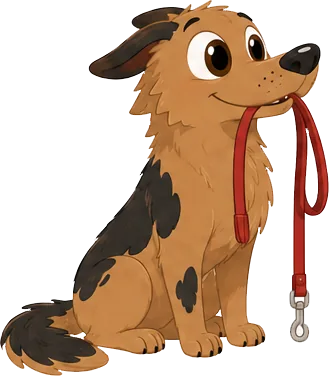
Dogs Trust recommends starting recall in a quiet, enclosed place. Use a consistent cue and reward the return with something your dog values. Gradually add distance and distractions, rather than beginning beside the most fascinating patch on the walk5.
A practice plan to adapt
- Begin somewhere easyUse a secure space with few distractions5.
- Make the return worthwhileReward with a valued treat, toy or other suitable reward5.
- Increase difficulty graduallyAdd distance and distractions as your dog improves5.
- Manage outdoor practiceUse a long line attached to a harness while learning5.
Stay calm if your dog does not return. Dogs Trust advises going to collect them or guiding with the line without pulling them towards you. Always welcome a return, even when it took longer than you hoped5.
Applying that guidance here means making the practice achievable before relying on it near a favourite rolling spot. A cheerful response in the kitchen is a starting point, not a promise about every verge.
Keep your aim concrete: fewer opportunities for the unwanted roll, and more successful returns you can reward. You do not have to settle the ancestral explanation before improving the walk.
The wash need not become an ordeal
PDSA advises using dog-specific shampoo; human shampoo can irritate canine skin. If your dog has a skin condition, ask your vet which product is suitable. Frequent unnecessary shampooing can strip natural coat oils, so this clean-up need not become a new routine of daily baths6.
Its grooming advice also stresses going slowly, offering praise and treats, and stopping if your pet is worried or stressed. Check for skin or coat changes and seek veterinary advice about concerns6.
Keep the clean-up manageable
If cleaning feels difficult, that is a separate problem worth addressing. For example, deciding which product suits an existing skin condition is a veterinary question; deciding what your dog meant by the roll will not answer it.
Keep hygiene proportionate

The RSPCA advises removing fox droppings from gardens with thick gloves and washing hands after contact with soil or pets. It describes the risk of children acquiring roundworm infection from fox droppings as low. Low risk still leaves a straightforward reason for sensible clean-up7.
It also advises keeping dogs away from fox carcasses, which can remain a source of mange after death. A smelly roll alone does not establish that your dog has caught mange; contact your vet if you are concerned about infection7.
NHS guidance explains that toxocariasis is rare and requires swallowing infective worm eggs, usually from contaminated soil or sand. Freshly passed poo does not transmit it immediately: the eggs need time in the environment. That distinction does not make an unidentified deposit safe to handle bare-handed8.
Wash hands before eating, teach children not to eat soil or sand, and keep them away from heavily contaminated play areas. Follow your veterinary practice's parasite-prevention advice for your pets8.
For the next walk, the most useful explanation may be a modest one: you saw a particular roll in a particular place. You can watch for that opportunity, practise coming away and deal calmly with the result. A mystery can remain interesting without making the car smell any better.
Sources and further reading8 sources
The small numbers in the article link to the source behind each fact. Sources open on their own websites.
- Weird things dogs do
- Scent rubbing in wolves (Canis lupus): the effect of novelty
- The scent of your enemy is my friend? The acquisition of large carnivore scent by a smaller carnivore
- Responses to olfactory stimuli in spotted hyenas (Crocuta crocuta): I. Investigation of environmental odors and the function of rolling.
- How to train your dog to come back when called
- How often should you groom your pet?
- Foxes in the garden
- Toxocariasis