

In this article
You pull the front door shut, and before you reach the end of the path the barking starts. Or you come home to a scratched door frame, a chewed cushion or a puddle by the mat. It is upsetting for both of you, and the label most of us reach for is separation anxiety.
That label covers more than one feeling. Vets now often use the broader term separation-related problem, because not every dog who struggles alone is anxious: some are scared, panicked, frustrated, bored or even over-excited1. What helps depends on what is behind it. Start by finding out what happens after you leave, then take those clues to someone who can help.
One label, several feelings

A University of Lincoln team warned in 2020 that "separation anxiety" risks being treated as a diagnosis, when the signs can come from fear, frustration or the panic of losing contact with someone a dog is attached to4. Blurring them, they argued, can lead to advice that contradicts itself or even makes things worse4.
The team analysed owner reports on 762 dogs showing at least one sign of a separation problem4. Frustration came through strongly, and the dogs fell into four broad groups, labelled exit frustration, redirected reactive, reactive inhibited and boredom, which the researchers offer as starting hypotheses for future work4. Fear of noises, often blamed, was relatively uncommon and did not define a group of its own4.
A small Hungarian experiment points the same way. Researchers filmed 56 pet dogs left alone for three minutes in an unfamiliar room5. Dogs their owners described as demanding (pushy about food, play or company, which the team thought might reflect a low tolerance for frustration) barked earlier and scratched at the door sooner5. Dogs with fearful tendencies whined sooner and barked less5. Three minutes in a strange room is not a day at home, and the authors stress that these feelings can overlap or change over time5.
What it can look like
The familiar signs are barking, howling or whining, destruction (often near doors and windows), and weeing or pooing indoors3. Quieter ones include trembling, panting, drooling, pacing, ignoring food or chews left for them, and worry as you get ready to go3, 2.
- 22.3 to 55%of pet dogs are thought to show signs of a separation problem, in earlier studies summarised by the Lincoln team4
- 14 to 40%of dog behaviour referral cases involve separation problems, in the same summary4
- Halfof dogs who struggle when left alone show no obvious signs, says the RSPCA, so it is easy for owners to miss3

A quiet dog is not always a contented one. Low energy and looking depressed are on the PDSA's list of signs1. In the Lincoln survey, depression-like signs were the second most common of the main signs, reported by the owners of 52.9% of the dogs, though the researchers note that judging a dog to look sad is subjective4.
Film what happens after you leave

You miss what happens while you are out, so a recording can help. Dogs Trust suggests watching your dog with your phone or a remote camera2, and the RSPCA suggests checking now and then even if you think your dog is happy, to catch hidden signs of distress3.
Filming your dog: what to note
- Point the camera where your dog spends most of their time, and try a few spots if the first misses the action2
- Start recording before you get ready, as some dogs show signs of worry before you leave3
- Keep filming for at least half an hour: signs usually start within a few minutes to 30 minutes of you leaving3
- Leave a chew they enjoy when you are with them, and note whether they touch it3
- Note where any scratching or chewing happens, and what set off any barking3
- Save the clips and any notes for your vet or behaviourist2
Reading the clues
What you see can hint at what your dog is feeling. Treat this as a list of questions to take to your vet or behaviourist, not a diagnosis.
| What you see | What it may point to |
|---|---|
| Distress as you get ready, or within minutes of leaving | Difficulty with being alone itself2, 3 |
| Settled at first, trouble much later | Being left too long, boredom, a disturbance or needing the toilet2 |
| Leaves a favourite chew untouched while you are out | Possibly worry about being alone3, 2 |
| Barking and scratching at the door you left by | Possibly frustration at being shut away from you5, 4 |
| Whining, trembling or panting, with little barking | Possibly fear or anxiety5, 2 |
| Barking at passers-by or noises outside | Being disturbed by what they can see or hear3 |
| Weeing indoors and restlessness | Distress, or a health problem such as a urinary infection2 |
| Cheerfully chewing or ripping things up | Possibly fun or boredom: a veterinary behaviourist can help tell from a video1 |
One dog can show several of these, and the feelings behind them can mix5. In the Hungarian study, dogs with phobias, such as of loud noises or thunderstorms, whined somewhat more and tried harder to escape5. Boredom matters too: Dogs Trust says boredom and frustration are unpleasant feelings that, over time, may turn into anxiety about being left2.
Why it is never spite
Coming home to a wrecked sofa is maddening, but your dog is not getting back at you. Dogs live in the moment, Dogs Trust explains, and do not understand that being told off when you get home is about something they did hours earlier2.
That "guilty" look is no confession. A dog who has been told off may lower their head, put their ears back and tuck their tail, which owners often read as guilt3. Dogs Trust calls that a common misconception: the dog is most likely reading your body language, or has learned to expect a telling-off when you come home2. The RSPCA warns that the dog then grows more anxious about your next departure, which can make the chewing and barking worse3.
Questions owners ask
Questions owners ask
Would a second dog help?
Probably not. Canine company may reassure your dog, but Dogs Trust says it will not solve separation anxiety, and two dogs who do not get on can make things far worse2. A UK study of 1,807 dogs found no link between living with other dogs and the risk of separation-related behaviour6.
Will my dog grow out of it?
Do not count on it. Dogs Trust says separation anxiety does not normally resolve by itself2. Signs can change, though: in the same UK study, 55.7% of dogs with signs before the pandemic that were being left alone again in October 2020 had stopped showing them, but the researchers did not know how many owners had been working on the problem6.
Would a crate help?
Not on its own. Dogs Trust warns that a dog may become afraid of the crate, and risks serious injury if they panic inside it2.
Do calming products or medicines work?
Dogs Trust says there is no scientific evidence that over-the-counter products work for separation anxiety. Prescription medicine can help some dogs alongside training, a decision for your vet and a behaviourist2.
Routine changes, and what to do meanwhile
Changes to your routine, such as a new job or new working hours, can unsettle a dog2. Dogs Trust researchers followed 1,807 UK dogs through 2020: one in ten (9.9%) with no signs before the pandemic had new signs by October, once owners were going out more, and dogs whose time alone had dropped most in lockdown were most at risk6. The change in time alone explained only a small part of the risk, but the authors suggest building time alone back up gradually after any sudden change6.
While you wait for help, Dogs Trust advises avoiding leaving your dog alone, or for longer than they can cope with, as that is the only way to stop the problem getting worse. Friends, family, dog sitters and daycare can fill the gaps2. When you must go out:
- Walk them first, with a chance to go to the toilet2.
- Set them up with water, safe chews and the comfy spot where they usually rest2.
- Cut the triggers. Close the curtains if passers-by set off barking, and leave a radio on to muffle noise outside3.
- Keep it calm. Say goodbye and hello without a big fuss2.
- Get back soon. The RSPCA recommends no more than four hours alone for any dog, and much less for puppies, but a dog who struggles alone may feel anxious within minutes3.
When to call your vet and a behaviourist
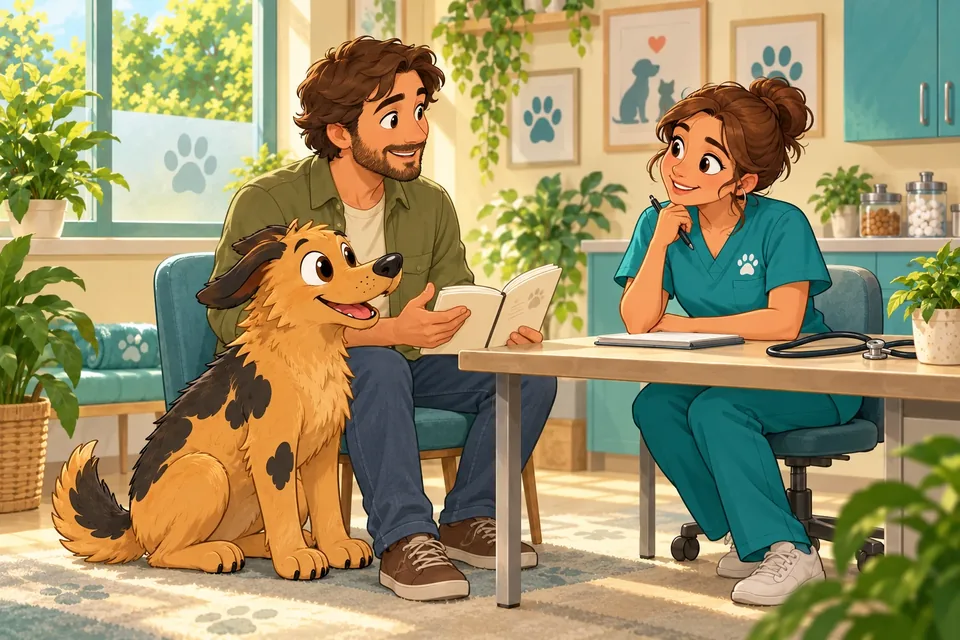
Start with your vet, especially if your dog's behaviour has changed recently, they have become more fearful in general, or they seek comfort more than usual, which can mean pain or illness2. Health problems can cause or worsen separation-related behaviour3. Losing hearing or sight can make a dog more dependent on you, thyroid or adrenal conditions can raise anxiety, and a urinary infection can look like toileting from distress2.
Take your videos and notes along2. If things do not improve, your vet should refer you to a clinical animal behaviourist, who can help you find the cause and draw up a treatment plan3. On the Animal Behaviour and Training Council's register, these behaviourists work on referral from a vet, and veterinary behaviourists are clinical animal behaviourists who are also vets7. Dogs Trust also runs a free Behaviour Support Line on 0303 003 66662. Most dogs improve with the right help, the PDSA says, though it takes time1.
Save a few clips and jot down when the trouble starts. They give you and your vet somewhere useful to begin, beyond the chewed cushion you find when you get home.
Sources and further reading7 sources
The small numbers in the article link to the source behind each fact. Sources open on their own websites.
- Separation anxiety in dogs
- Separation anxiety in dogs: signs, causes and how to help
- Recognising separation-related behaviour and anxiety in dogs
- Developing Diagnostic Frameworks in Veterinary Behavioral Medicine: Disambiguating Separation Related Problems in Dogs
- Separation-related behavior of dogs shows association with their reactions to everyday situations that may elicit frustration or fear
- Impact of Changes in Time Left Alone on Separation-Related Behaviour in UK Pet Dogs
- Types of Practitioners