

In this article
The lead is in your pocket, the park is wide open, and your dog has just spotted a spaniel at the far end of the field. You call. Your dog glances back, weighs it up and sets off the other way. If that sounds familiar, you have plenty of company.
In a survey of dog owners released by the insurer NFU Mutual in February 2026, one in ten admitted their dog has no recall, and 44% said their dog comes back only "some" or "most of the time"1. The story gives no sample size, so treat those as a rough picture. Still, a strong recall matters: it means you can clip the lead back on with ease and get your dog out of a situation before it turns dangerous2.
The good news is that recall can be taught, and the reasons it falls apart are well understood. Here is why dogs ignore the call, and a step-by-step plan, drawn from Battersea and Dogs Trust, for a recall that holds up in the park.
Why dogs don't come back
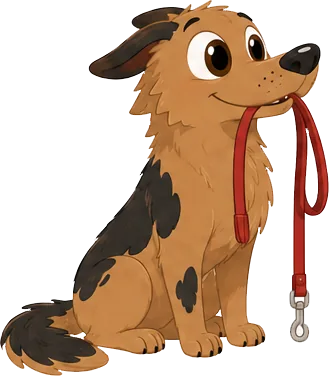
Start with your dog's side of it. Off the lead, a whole world of choice opens up, and chasing a squirrel or playing with another dog can seem more exciting than coming back to someone they see every day3. Some dogs are not even sure that you want them back3.
Then there is what the call has come to mean. If coming back means the lead goes on and the fun ends, or that you are visibly frustrated, Battersea says a dog understandably won't want to return2. Repeating the call can backfire too. Dogs Trust advises against calling again when your dog is unlikely to come, because it could teach them that not coming back is fine3.
Battersea boils the rest down to two things. A dog that isn't reliably coming back either doesn't understand the cue yet, or isn't being offered a reward that is motivating enough2. Neither is a character flaw, and both can be fixed.
Recall can also wobble as a young dog grows up. In Generation Pup, a large Dogs Trust-funded study that follows puppies in the UK and Ireland, owners named recall as a problem for 3.3% of dogs at six months, 5% at nine, 6.6% at 12, 5.8% at 15 and 2.8% at 18 months (1,718 owners answered the six-month survey and 684 the last one)4.
Owners had to think of problems unprompted, which the researchers expected to give lower figures than a tick-box survey would4. The shape is the point: complaints rose through adolescence, peaked around the first birthday and had fallen back by 18 months4. Nobody knows yet whether that fall came from dogs maturing, owners training them or owners minding less4, so keep practising through the teenage months.
Make coming back worth the run

Every recall is a small trade, and the reward is your side of it. Start by working out what your dog values most. For many dogs that is food, although an excited dog may prefer to come back for a game with a particular toy2. Whatever you choose should be special, something your dog doesn't get all the time, and ideally kept for recall alone2.
In a small study at the University of Lincoln, ten pet dogs ran a 20-metre runway significantly faster for one piece of sausage than for one piece of dry food, though the dry food packed more energy per gram5. In a parallel test with nine dogs, five pieces of dry food did not make them run significantly faster than one5. The authors say the results should be read with some caution because the groups were small, but they recommend a tastier reward over a bigger pile of an ordinary one5.
Rewards also came out ahead of remote electronic training collars (e-collars) in a UK study, published in 2020 from training filmed in 2010 and 2011, in which professional trainers worked with 63 dogs referred for off-lead problems, mostly chasing and poor recall6. All three groups (e-collar trainers with and without the collar, and reward-focused trainers) did well, but dogs taught by the reward-focused trainers answered 82.5% of "Come" calls first time, against 71% with e-collars, and set off back a fraction of a second sooner6.
The comparison was not perfect: the reward-focused group trained months later, not every group was assigned at random, and the researchers note the gap may reflect the trainers' whole approach as much as the collar itself6. Still, they concluded there was no evidence that e-collar training is necessary, even for the chasing and recall problems it is mostly used for6.
A step-by-step plan, from living room to park
Battersea and Dogs Trust build a recall the same way: start somewhere easy, make every success pay, and only make it harder once your dog is getting it right2, 3. Dogs Trust starts with your dog's name, then adds a cue: a short word such as "come" or "here", or a whistle, plus a visual signal such as arms held wide in case your dog can't hear you3. Everyone at home should use the same word and movement3.
Building a recall
- Start at homeSay your dog's name, then the cue, with real enthusiasm from close by; step back and reward the moment they reach you2, 3
- Spread it aroundCall from other rooms and the garden through the day, until your dog comes back reliably2
- Add a helperTake turns calling your dog away from a game with the other person; whoever calls should always be the better offer2
- Go out on a long lineClip it to a harness and practise in a quiet part of the park2
- Pick moments you'll winAt first, not mid-play or nose-deep in a smell; build up to those later2
- Raise the bar slowlyAdd distance and bigger distractions a little at a time3
- Keep it going all walkHold the collar or harness as you reward, and call throughout the walk, not only at the end2
If your dog isn't coming back reliably, go back to the beginning and be patient2. As your dog improves, you won't need a treat every single time, but Dogs Trust suggests still rewarding every so often to keep them keen3.
Practising safely on a long line
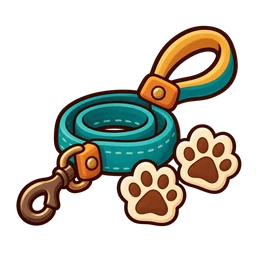
A long line is a rope that clips to a harness like an ordinary lead, but unlike an extending lead it stays the same length; lines come in lengths from 3 metres up to 307. Battersea calls long lines a safe and effective way to practise recall before letting a dog off the lead completely7. Handled carelessly, though, a line can injure you or trip someone else7, so a few basics are worth getting right.
Long-line basics
- Clip the line to a harness (the back clip, if it has two), not a collar, so a dog who hits the end is less likely to be hurt7
- Hold it in two hands: the one nearest your dog lets line out and slows them with a gentle grip and release7
- Let out only as much line as you need, because too much slack can tangle you up7
- Choose a line you can hold comfortably, and stay alert: a line that runs through your hands can cause an injury7
- Watch out for other people and branches, since a line can trip someone or snag7
- If your dog ignores you, guide them in gently or go and collect them, but never pull them towards you3
Once your dog is responding well, Battersea suggests dropping the line and letting it trail on the ground before you go fully off lead7. A line without a handle is less likely to catch on things like branches7.
Habits that keep a recall strong
Much of what makes a recall last happens in the seconds after you call, and none of it costs a thing.
The seconds after you call
Do
Going off lead, and when to get help
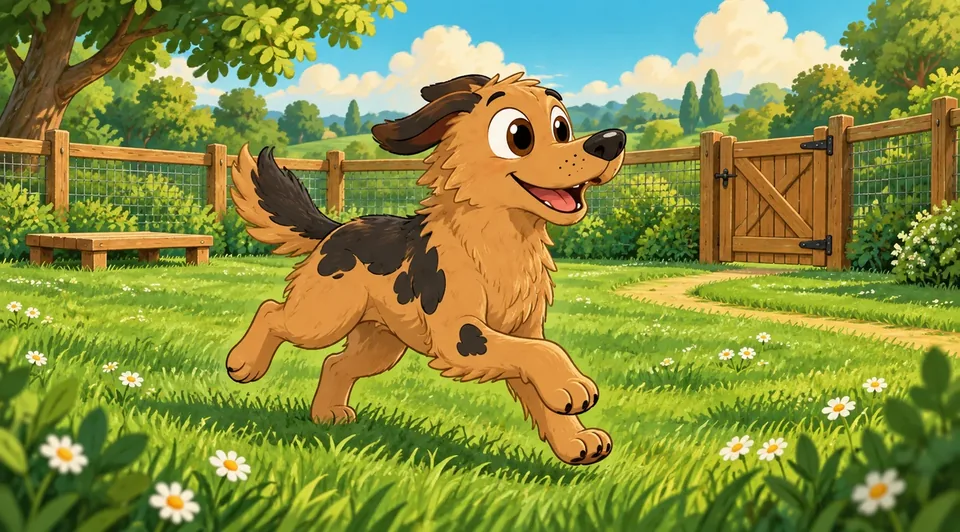
Until you are confident your dog will come back when called, keep training on a long line attached to a harness, and let them off only in secure areas3. Near livestock, keep any dog on a lead, however reliable its recall seems1.
If you have worked through the steps and still see no progress, bring in expert help: Dogs Trust suggests a qualified trainer or behaviourist, and Battersea a certified behaviourist3, 7. Dogs Trust also runs a free Behaviour Support Line for tailored advice3.
One change needs a vet. If an older dog who used to come back reliably starts ignoring you, it may be their hearing: older dogs can struggle with sight and hearing8. Dogs Trust notes that an ageing dog may still hear a whistle but not your voice, and asks owners to tell their vet at the first sign of behaviour changes8. A hand signal taught early comes into its own here3.
Next time the spaniel appears at the far end of the field, the aim is a dog who hears your call and thinks of the best treat in your pocket. Every short, cheerful session brings that moment a little closer.
Sources and further reading8 sources
The small numbers in the article link to the source behind each fact. Sources open on their own websites.
- UK cost of livestock worrying rises to almost £2m
- How to teach your dog a recall
- How to train your dog to come back when called
- Owner-Perceived Undesirable Behaviours in Young Dogs and Changes with Age
- Reinforcer effectiveness in dogs—The influence of quantity and quality
- Efficacy of Dog Training With and Without Remote Electronic Collars vs. a Focus on Positive Reinforcement
- How to use a long-line lead
- Caring for an older dog