

In this article
You have stood on the lawn for ten minutes in your slippers, praising every sniff. Nothing. You come back in, fill the kettle and turn round to find a neat puddle in the middle of the kitchen floor. It is hard not to take it personally.
Try not to. A puppy who wees indoors straight after a trip outside is not making a point. Their body is still being built, and the habit is still being learned. Here is a realistic daily routine drawn from the RSPCA, Battersea, Dogs Trust and the PDSA, why accidents happen, and a straight answer to the question every new owner asks: how long will this take?
Why accidents aren't defiance

Start with the equipment, which is newer than it looks. For roughly their first three weeks, puppies rely on their mother licking them in order to wee and poo at all5. So an eight-week-old puppy has had only about five weeks of doing it unaided.
The parts are unfinished, too. Dogs Trust points out that a puppy's bowels, bladder and the muscles that control them are still growing3, and Battersea says that is why young puppies can't hold on for long2. The RSPCA adds that dogs don't reach full bladder capacity until they are about 12 months old1.
Then there is the new home. Dogs Trust notes that even fully trained dogs have accidents sometimes, especially when settling in somewhere new3. Puppies bring habits with them, too: dogs often prefer a particular surface, such as grass, gravel or soft flooring, usually whatever they were used to before coming home2. If yours keeps choosing the rug, Battersea suggests lifting rugs or blocking off carpeted areas for now2.
Some wees are not about toilet training at all. Some dogs wee when they are excited or unsure, and Battersea is clear that this is not misbehaviour and they are not doing it on purpose6. Keep greetings calm, avoid leaning over them, and give them a moment to settle before you say hello6.
How often should a puppy go out?
The advice varies, which is confusing at three in the morning. The RSPCA suggests a trip every 45 minutes to an hour, depending on the puppy's age, on top of the key moments below1. Battersea says puppies often need a break every hour at first2. The PDSA suggests every two to three hours during the day7.
Much of the difference is age. Puppies hold on better as they grow and need fewer breaks7, and Battersea suggests building up to longer gaps slowly2. The moments matter as much as the clock, because eating and excited play both bring on the need to go7. Start near the hourly end with a young puppy, and stretch the gaps a little at a time.
When to take your puppy out
- First thing in the morning, and whenever they wake from a nap7, 1
- Shortly after each meal, and after a drink7, 2
- After play, or halfway through a play session7
- After any excitement, such as visitors arriving1, 3
- Before you leave them, and when you come back1
- Last thing before bed1
- A quick trip in the night, with an alarm set, since most puppies can't last until morning2
- Whenever you see sniffing, circling, restlessness or a beeline for the door1, 2
A good toilet trip, step by step
- Same spot, on a leadGo to the same place each time; a lead at first keeps their mind on the job1, 7
- Wait quietlyIf they would rather explore, stand still and ignore them for 10 to 15 minutes so they can focus6
- Say your cueJust as they start, softly say a word such as "toilet" so they link it with going1, 3
- Reward at onceThe moment they finish: praise, plus a treat or a game1, 3
- Stay out a little longerA short wander or play, so they don't learn that going ends the fun1
- No luck? Try againGo in, keep a close eye on them and head back out soon, as they are likely to need to go3, 6
Most advice pairs praise with a treat1, 3, 7. Battersea is the exception: it advises against treats for toileting, because some dogs may start offering little squats or pretend wees to earn one. If that happens, wait until they have fully finished, or switch to quiet praise2.
As for the kettle moment at the start, Battersea calls weeing indoors straight after coming in very common in puppies still learning to link the outdoors with toileting6. Staying out a little longer helps, and so does keeping them close, on a lead or in an easy-to-clean area, when you come back in6. Young puppies may need carrying so they get there in time2.
When you find a puddle
There will be accidents, and the PDSA is firm that they are not the puppy's fault: they haven't been given enough chances to go outside7. What you do next matters more than the puddle.
Telling a puppy off does not teach them to hold on. The RSPCA warns that a punished dog may become scared and confused, because they won't connect the punishment with the accident, and that a dog who is shouted at may learn it is only safe to go when you are not around1. Dogs Trust adds that a dog who is told off may start going somewhere hidden to avoid you3.
Do and don’t
Do
- If they are about to go indoors, interrupt gently by calling their name, then take them outside1
- If they have already started, stay quiet and let them finish3
- Clean with an enzymatic cleaner or a 1:9 mix of biological washing powder and warm water2, 1
- Clean a slightly bigger area than you can see, out of your puppy's sight2
- Block off a favourite accident spot, or supervise more closely, until the habit improves2
How long does toilet training take?
The answer is a range, and it depends on the puppy as much as on you. Dogs Trust says puppies may naturally take a few months to be completely house trained without the odd accident3, and Battersea's milestones make a useful yardstick.
| Stage | What to expect |
|---|---|
| First days | Some catch on fast, others take much longer, and even quick learners have accidents7 |
| Four to six weeks | Most have a routine, which is not the same as fully trained2 |
| Around six months | Reliability usually arrives, with better physical control2 |
| Around a year | Full bladder capacity1 |
UK research points the same way. Generation Pup, a study that follows puppies in the UK and the Republic of Ireland as they grow, asked owners whether their young dog was showing any behaviour they found a problem. Toileting came up for 2.3% of six-month-olds and 0.7% of 18-month-olds8. Owners answered in their own words, which the researchers expect to give lower figures than a tick-box list, and the drop itself was not tested8. Still, the direction is the one you want.
Expect a wobble or two along the way. Regression can happen during growth stages, after a change of routine or after a move, and puppies may go through fear periods when familiar places suddenly feel worrying6. Go back to basics: more trips outside, closer supervision and praise for every success6. In time, your puppy may start telling you when they need to go, perhaps by whining or moving towards the door3.
Pads, flats and rainy days
Questions owners ask
Should I use puppy pads?
They can help if you live in a flat, have no garden or your puppy isn't fully vaccinated, ideally for short spells or overnight. Battersea suggests one quiet spot away from food and bed, with pads as a back-up, never a replacement for going outside2.
How do I phase pads out?
Once accidents are fewer, stop replacing the pad, or move it just outside the door if that is safe. Switching back and forth between pads and outdoors can slow learning2.
I live in a flat. What changes?
Allow for the time it takes to get outside, and carry a young puppy through corridors and lifts so they don't have an accident on the way2.
My puppy won't go out in the rain. What now?
Many dogs dislike rain, wind or cold surfaces. Go out with them, choose a sheltered spot and add a little play or training6.
When to call the vet
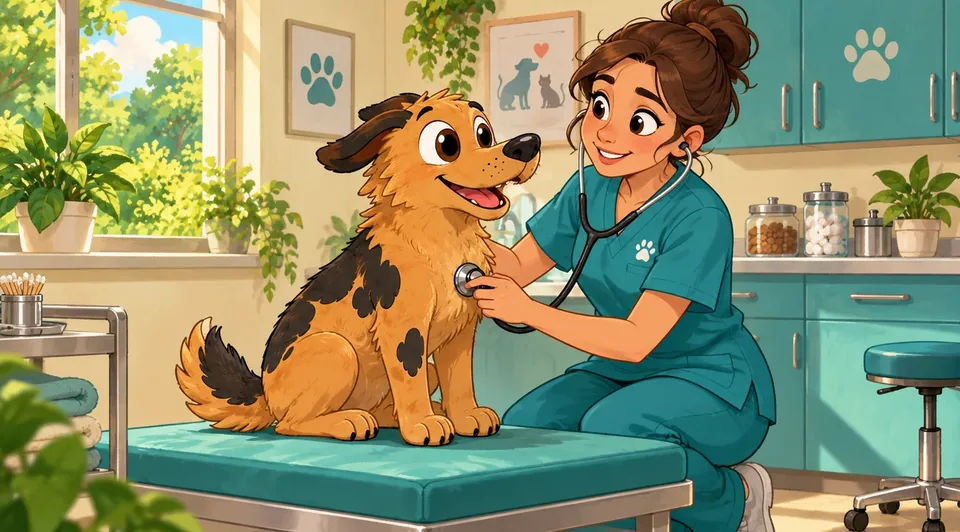
Most accidents are a puppy learning. A few are a body asking for help. The PDSA lists the signs of a bladder problem: blood in the urine, weeing more often, leaking, pain when weeing, weeing in unusual places and drinking more than usual4.
Battersea's advice is to see your vet if accidents stay frequent despite consistent training, or if your puppy suddenly becomes incontinent, drinks more, strains or seems uncomfortable2. Take a fresh urine sample to the appointment if you can4. If the vet rules out a medical cause, the RSPCA says they may refer you to a clinical animal behaviourist, and a qualified trainer can help too1, 2.
One morning soon you will realise you haven't reached for the kitchen roll in days, and that your puppy is sitting by the back door, looking at you. Open it, follow them out and make a fuss of them when they go.
Sources and further reading8 sources
The small numbers in the article link to the source behind each fact. Sources open on their own websites.
- Toilet training your dog
- How to toilet train a puppy or dog
- How to toilet or house train your dog
- Urine and bladder problems in dogs
- A review of maternal behaviour in dogs and potential areas for further research
- Toilet training your dog: common problems and how to fix them
- Toilet training your puppy
- Owner-Perceived Undesirable Behaviours in Young Dogs and Changes with Age