

In this article
Your dog shoots through the front door ahead of you, hauls you towards the park and then goes mysteriously deaf when you call. Sooner or later someone will tell you what is going on: your dog is trying to be top dog, and you need to show them who is boss.
The idea is called dominance theory. Dogs Trust calls it outdated and debunked, and says current research shows it is incorrect1. Here is where the 'alpha' idea came from, why it misreads wolves and dogs alike, what confrontation can cost, and what good leadership looks like instead.
Where the alpha idea came from

The story starts with wolves. The prevailing view of a wolf pack, the wolf biologist L. David Mech wrote in 1999, was of a group forever vying for dominance, held in check by an alpha male and an alpha female. Yet most research on how packs behave, he pointed out, had been done on captive wolves: unrelated animals from various sources, put together and left to breed2.
The captive studies he cites go back to 1947, and in them wolves that did not know each other sorted themselves into ranks, from alpha down to omega. With groups like that, Mech wrote, the labels were probably fair, because most species thrown together in captivity would usually arrange themselves the same way2.
From there it was a short step to dogs. Researchers suggested that dogs would also fight to be the leader, or alpha, of their pack, and people assumed their dogs saw them as competition for the position of top dog1. The training that followed told owners to show the dog its place at the bottom of the pack, and led people to use punishment or physical force1.
What wild wolves really do
Wild wolves turned out to live differently. Mech, then at the US Geological Survey, drew on earlier research and 13 summers of watching one pack on Ellesmere Island in Canada's far north. The typical wild pack, he concluded, is a family: a breeding pair and their young from the previous one to three years2.
The so-called alpha male and female, he wrote, are merely the parents, and dominance contests with other wolves are rare, if they happen at all: in 13 summers he saw none. Any parent is dominant to its young, so calling the parents alphas adds no information. Applying captive studies to wild packs, he argued, was like studying people in refugee camps to understand family life2.
Life in a wild pack, at least in the summers he watched, was much calmer and more peaceful than the captive studies had described, and displays of rank were uncommon except when there was food to compete for2. Among the authors Mech cited for the old picture was his own younger self2.
The point here is not so much the terminology but what the terminology falsely implies: a rigid, force-based dominance hierarchy2.
What dominance does and doesn't mean in dogs
Dogs, in any case, are not wolves. Over thousands of years they have evolved into a different animal, a social one that bases its relationships on individual experience1. As AVSAB, an American veterinary society for animal behaviour, puts it, the best model for understanding domestic dogs is domestic dogs3.
None of this means dominance is a myth in every sense. Behaviour scientists use the word for a relationship between particular animals, settled by aggression on one side and giving way on the other, over who gets first call on things like food or a favourite resting spot3.
Where the idea goes wrong is the 'dominant dog'. In 2009 researchers at the University of Bristol pointed out that there is little evidence for dominance as a trait of individual dogs, and that treating a wish to be dominant as what drives a dog's behaviour misuses the word. Learning by association, they proposed, together with how much a dog values whatever is at stake, can explain a dog's aggressive and submissive behaviour more neatly than dominance can7.
Jumping up, pulling and other 'power moves'
So if your dog is not angling for promotion, why the barging and the selective deafness? AVSAB gives a refreshingly ordinary answer: most unruly behaviour happens because it has been rewarded, and because nobody has taught the dog something better to do instead3.
The old explanation lingers all the same. In a 2019 online survey of 2,531 owners in the UK and Ireland, reported by researchers at Scotland's Rural College, owners believed that dogs who pull on the lead want to be in charge (21.4%), need stronger pack leaders (17.5%) or are dominant (11.5%), and the researchers concluded that such misconceptions persist8. Happily, owners favoured praise and food to tackle pulling, and rated rewards the most successful approach8.
| The moment | The alpha story | What the evidence says |
|---|---|---|
| Jumping up to greet you | Claiming higher status | Jumping up gets attention, so it keeps happening3 |
| Ignoring you when called | Defying the leader | Whatever is distracting them is rewarding them right now3 |
| Going through doors first | Leading the pack | Like most unruly habits, barging ahead usually sticks because it has paid off, not as a bid for rank3 |
| Dinner time | The alpha should eat first | Making a dog eat after you has little basis in science5 |
| Treats | They will think they outrank you | A treat for jumping up can reward jumping up, but it does not teach rank3 |
Why confrontation backfires
In a US study published in 2009, 140 owners whose dogs were booked in at a university veterinary hospital's behaviour service filled in a survey about the methods they had already tried, and how their dogs had reacted4.
When owners tried confrontation
Aggression here meant growling or baring teeth, snapping or lunging, or biting, as owners reported it4. Several confrontational methods drew an aggressive response from at least a quarter of the dogs they were tried on, while reward-based training drew one from very few4.
It was a small study of dogs that already had problems, it relied on owners' memories, and the authors could not be sure whether aggression led owners to a method or the method led to aggression4. Dogs brought in for aggression towards familiar people were more likely than other dogs to react aggressively to the alpha roll. That did not surprise the authors: a dog rolls onto its back to avoid a threat or to appease, and may move on to defending itself if the threat keeps coming4.
Surveys more broadly have linked training that relies on force or discomfort with later problems, including aggression towards people and other dogs. Surveys cannot separate cause from correlation, but if such methods cured problems, AVSAB points out, the link would run the other way6.
A dog faced with threats or force may react with aggression because the person threatening them has made them afraid, not because they want to be dominant3. The RSPCA calls asserting dominance an outdated concept, and warns that staring a dog out, shaking them by the scruff or alpha rolling them at best may do little good and at worst will severely worsen aggression5. Dogs Trust adds that this kind of control can damage the bond between a dog and their owner1.
What good leadership looks like
The RSPCA puts it well: relationships with pet dogs are far too complicated to be defined as either dominant or subordinate5. Dropping the alpha act does not mean letting your dog do as they please, though. Dogs learn best with structure, routine and guidelines, AVSAB says; the difference is that those boundaries are taught without fear, intimidation or pain6.
AVSAB offers a definition of leadership worth borrowing: being able to influence your dog to do things willingly3. You get there by setting clear limits consistently, rewarding the right behaviour straight away, and making sure the wrong behaviour stops paying off3.
Leading without the alpha act
Do
- Reward the behaviour you want the moment it happens3
- Take away the pay-off for habits you don't want: no attention for jumping up, plenty once all four paws are down3
- Teach a polite alternative, such as waiting in a sit before a treat arrives3
- Arrange things so the right choice is easy, then reward it6
When to get help
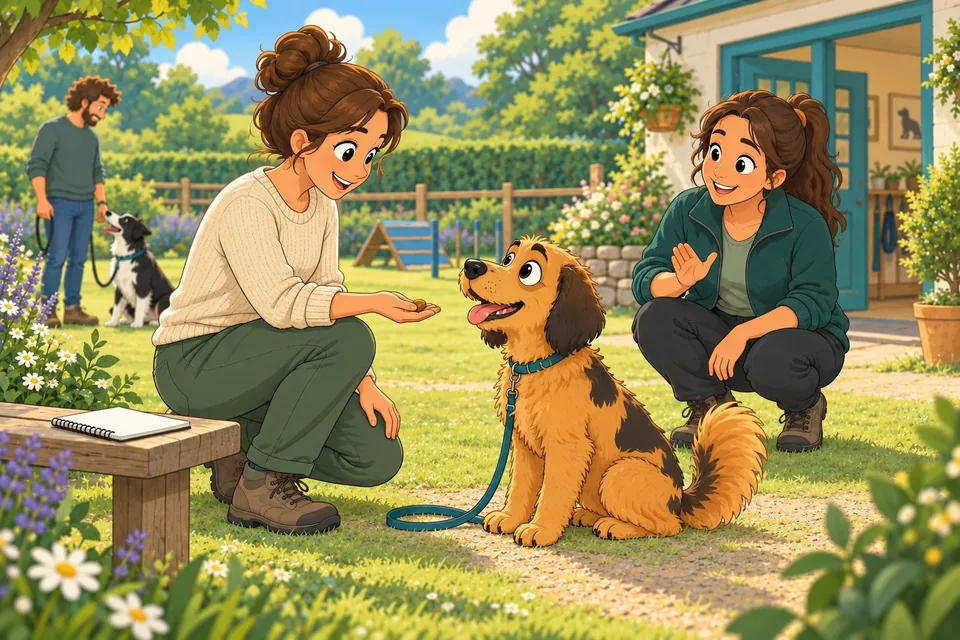
If your dog growls, snaps or bites, start with your vet, who can check for a medical cause6. Aggression can be a sign that a dog is unwell or in pain, and if your vet finds nothing wrong, they can refer you to a qualified, experienced behaviourist5.
If you look for a trainer, listen to how they talk. AVSAB tells vets to steer their clients away from any trainer who talks about dominance, being leader of the pack or alpha theories6. Choose a trainer who uses rewards and focuses on teaching your dog what to do6.
Next time your dog barges through the door ahead of you, you can let the coup theory go. They are doing what has worked for them before, and that is good news, because what works is something you can change.
Sources and further reading8 sources
The small numbers in the article link to the source behind each fact. Sources open on their own websites.
- Dominance
- Alpha status, dominance, and division of labor in wolf packs
- Position Statement on the Use of Dominance Theory in Behavior Modification of Animals
- Survey of the use and outcome of confrontational and non-confrontational training methods in client-owned dogs showing undesired behaviors
- Aggression in dogs
- Position Statement on Humane Dog Training
- Dominance in domestic dogs: useful construct or bad habit?
- Owner approaches and attitudes to the problem of lead-pulling behaviour in pet-dogs