

In this article
The vet reaches for a paw and your dog's weight shifts backwards. Claws scrabble on the table, the tail tucks, and a five-minute check turns into a wrestling match. If that sounds familiar, you have company: in owner questionnaires covering 26,555 dogs, 41% showed mild to moderate fear when a vet examined them, and another 14% showed severe or extreme fear1.
There is a hopeful twist. Breed, size and the other background details the researchers measured explained only about 7% of the differences in fear. Dogs with working, breeding or show careers were less fearful, perhaps because they were used to grooming, handling and restraint, and the authors suggest that handling and grooming practice matters as much as manners training and socialisation1.
Vets and behaviourists call this kind of preparation cooperative care: training with rewards so that a dog learns to accept handling and treatment, often with a way to say when they have had enough2. Here is how, from sofa to consulting room.
Can practice at home help?

A Canadian team tested a four-week programme on dogs already mildly to moderately fearful at the vet. Owners were asked to do five to ten minutes of exam-style handling twice a week, paired with a favourite treat, and to take their dog into the clinic for at least five minutes once a week6. Dogs with severe fear were left out, since they would need a tailored plan6.
Keeping going was hard: 44% of the volunteer owners asked to train did not keep it up. In the end, 15 trained dogs were compared with 22 untrained ones. Trained dogs were less likely to carry their head, ears and tail low at their next examination, and at that visit their overall fear scores were a little lower than the untrained dogs' (a median of 2 against 3), though neither group had changed clearly from its first visit. Heart rate, trembling and attempts to avoid the vet were no different, and the researchers called the programme mildly effective6.
A second small Canadian study changed the exam instead. Fourteen dogs were seen on a non-slip mat on the floor or a lap, licking food from a lick mat, in a package that also included home practice, numbing cream before blood tests and no white coat7.
Over four visits, those dogs' stress hormone fell further than in 14 dogs given routine care, though heart rate did not differ7. Both studies are small and their effects modest, but they point the same way. A 2021 review on easing fear at the vet adds that owners training at home need good guidance from their vet team, a trainer or a behaviourist, and should be ready for longer-term training2.
Touch and treat at home

Dogs Trust suggests little and often, as part of playtime. Touch your dog somewhere they enjoy, often the chest or behind the ears, for no more than three seconds, then give a treat and let them relax. Move gradually to a new area, such as a front leg, and stop if your dog looks uncomfortable3.
Get the order right: touch first, then the treat, so the touch comes to predict something good2, 5. Over many sessions, build from three seconds towards ten, aiming to touch the paws, lift the tail and look in the mouth, as a vet would3. Use the same words each time, such as "let me see", and handle the body in the same order, so your dog knows what is coming5.
The four-week study gave its owners this ladder. Start with the part your dog is happiest to have touched, and move up only when they are calm, not while they show signs such as a lowered body, moving away, freezing, vocalising, yawning or lip licking6.
| Body part | First steps | Build up to |
|---|---|---|
| Paws | A hand beside the paw, then a brief touch | Holding a paw for 10 to 15 seconds, then a paw massage |
| Mouth | A hand below the ear, then a stroke along the muzzle | Lifting a lip to show the teeth for 10 to 15 seconds |
| Ears | A touch on the back of the head, then each ear | Turning an ear back to look inside for 10 to 15 seconds |
| Body | Strokes along the back | Massage-like circles over the chest, sides, back and belly |
When that feels easy, practise in new places and with other people, starting from scratch each time5. Then tell your vet what you have practised and which words you use, so they can use them too4.
Teaching your dog to say yes
The review counts unpredictability and loss of control among the strongest psychological stressors2. Cooperative care tackles both. It was pioneered by zoos, where animals learn to take part in medical procedures, even blood tests, without sedation2.
At its heart is a consent behaviour: the animal rests its chin on a hand or steps onto a mat to show it is ready, and if it lifts its chin or steps away, the handling stops2. Dogs Trust's guide to standing still for the vet builds in the same choice: if your dog moves away, let them go and return to an easier step4.
Building a yes signal at home
One rule keeps it fair: offer the choice only when you can honour a no. If something must be done regardless, the review advises against the consent signal and suggests also teaching your dog, with rewards, to accept being held2.
Nails without the wrestling

First, check whether your dog needs nail trims at all. Many dogs never do, and adding pavement walks can be enough to keep nails short, though small, light dogs and dewclaws may still need trimming. Ask your vet8.
If they do, Dogs Trust suggests a couple of weeks or more of paw handling first, on a non-slip surface, with treats or a lick mat to hand. If your dog seems worried, go back to the last easy step. Then introduce the clippers in stages8.
- Scatter treats around the clippers on the floor.
- Touch a paw, let your dog sniff the clippers, then treat.
- Squeeze the clippers near the nails so your dog hears the sound.
- Snip dried pasta beside the paw to copy the snap, with a treat each time.
- Trim the very tip of one nail and reward. Build up to more nails gradually8.
Avoid the quick, the pink core of the nail that carries blood and nerves. On dark nails you cannot see it, so take only the sharp point8. Some dogs can learn to file their own nails on a sandpaper scratchboard2.
Making the practice a happier place
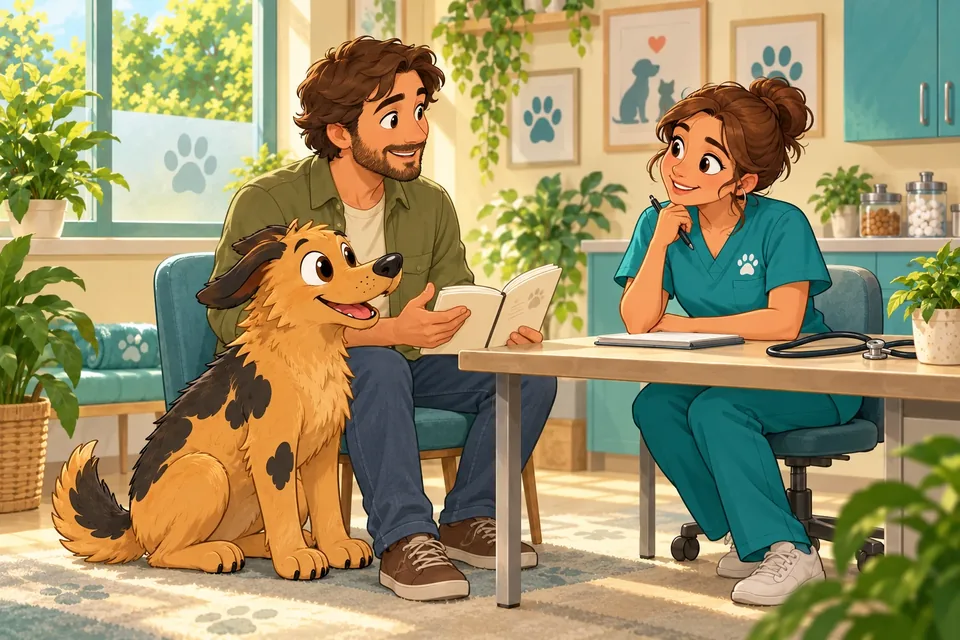
A practice is full of things that can worry a dog: strangers, smells of disinfectant and other animals, barking, and slippery floors and metal tables2. Start with visits where nothing happens. Drop in on a weekly walk and, if your dog enjoys it, ask the staff for a treat and a fuss3. Reward them for stepping onto the scale, too2.
The practice, in numbers
- Over 3 in 4dogs watched in one practice were rated fearful in the examination room2
- 53%of dogs showed more signs of stress just from being weighed, in guidelines the review cites2
- +20 beatsa minute in dogs' average heart rate in a shared treatment area without their owner, against the consulting room with them2
Book a quieter time if you can. On the day, sit away from the door with your dog facing away from other dogs, and bring a favourite blanket or toy3. If the wait looks long, wait in the car or take a short walk. For a shy dog, ask people to toss treats on the floor instead of leaning in2.
Things you can ask your practice for
- A double appointment for extra time (it will likely cost more)3
- The exam on the floor, on a non-slip mat, if your dog prefers it2
- Treats or a lick mat during the exam, if your dog is allowed to eat2, 7
- To stay with your dog, with minor procedures done in the consulting room2
- A short pause whenever your dog needs one2
Staying matters, and so does what you do. In one study in the review, dogs whose owners stroked and talked to them on the table tried less often to jump off, and had lower heart rates, than when their owners stood back2.
Dogs Trust puts it plainly: your dog is relying on you to speak up for them. If they tense or growl, politely but firmly ask the vet to stop. Growling and tensing are your dog's way of saying they are really uncomfortable, and a vet absorbed in the exam may not notice. Telling your dog off could make things worse3.
When it might be pain

Sometimes a dog objects to touch because it hurts. A dog in pain is more likely to show fear and react aggressively when handled, so if your dog has an established fear of handling or shows signs of aggression, see your vet first5. Talk to your vet if home practice brings growling, snapping or hiding4.
If your dog is well but still finds handling hard, your vet can refer you to an accredited behaviourist5. Some dogs need anti-anxiety medicine alongside a training plan, which is your vet's decision2.
None of this happens in a week, and it does not need to. A few seconds of touch and a treat on most days adds up, until one day the vet reaches for a paw and your dog lets them take it.
Sources and further reading8 sources
The small numbers in the article link to the source behind each fact. Sources open on their own websites.
- Investigating risk factors that predict a dog's fear during veterinary consultations
- A Review on Mitigating Fear and Aggression in Dogs and Cats in a Veterinary Setting
- How to have a happy vet visit
- How to keep your dog still at the vets
- How to handle your dog
- Effect of a Standardized Four-Week Desensitization and Counter-Conditioning Training Program on Pre-Existing Veterinary Fear in Companion…
- Effects of Changing Veterinary Handling Techniques on Canine Behaviour and Physiology Part 1: Physiological Measurements
- How to clip your dog's nails